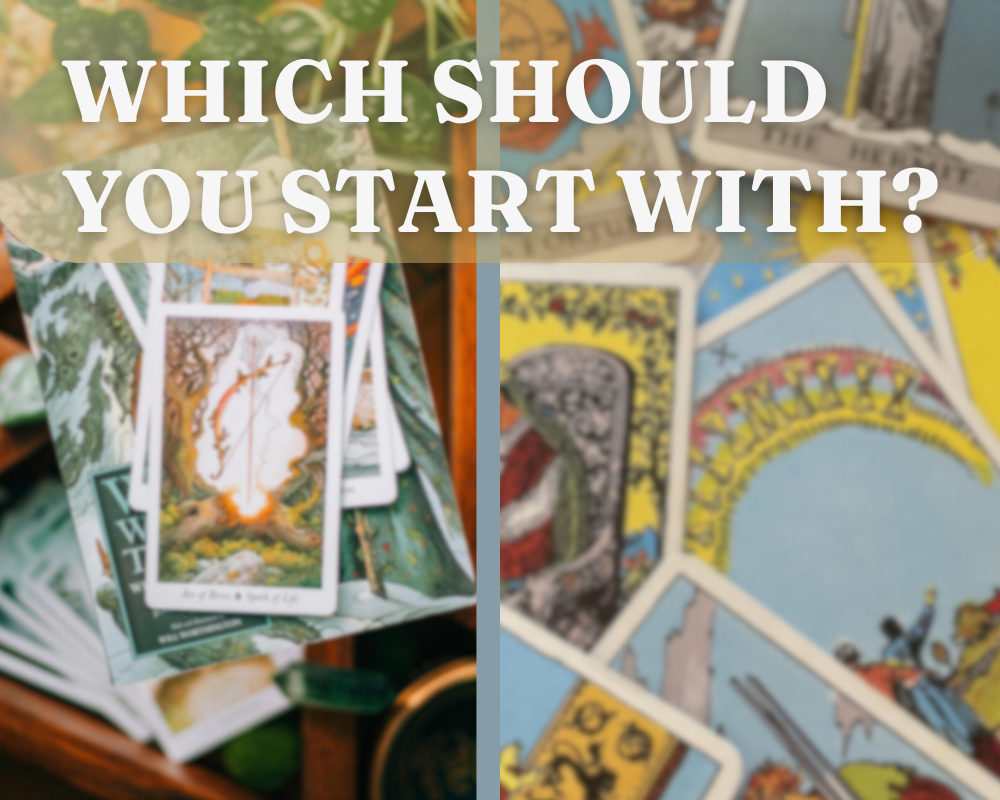
Rider-Waite vs Modern Tarot Decks: Which Should You Start With?
If you’re choosing your first tarot deck—or wondering whether you picked the right one—you’ve probably noticed two main styles come up again and again: the Rider-Waite tarot deck and modern tarot decks.
Both are valid. Both are widely used. And both can support a meaningful tarot practice.
But they serve different types of learners.
The goal of this guide is not to tell you which deck is “better,” but to help you understand which one will support you best right now—based on how you learn, how you process information, and what kind of relationship you want with tarot.
By the end of this post, you should have a clear sense of which deck to start with, and why.
The Rider-Waite Tarot Deck: A Foundational Approach
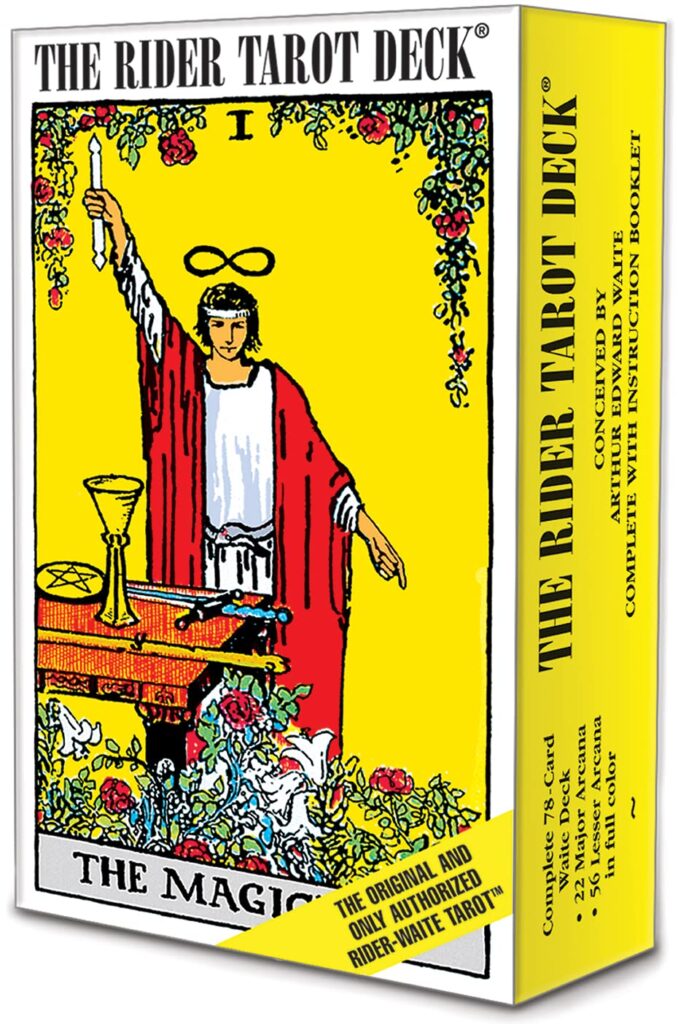
The Rider-Waite tarot deck is often described as the foundation of modern tarot—and that description is accurate.
This deck was designed with symbolism at the forefront. Every card, especially in the Minor Arcana, is illustrated with scenes that visually communicate meaning. Because of this, the Rider-Waite has become the reference point for most tarot books, courses, and learning materials.
Why many beginners start with Rider-Waite
If you’re looking to learn tarot in a clear, structured way, the Rider–Waite deck is a solid choice. It’s especially helpful if you plan on using books, guides, or courses, since so many learning resources are built around it.
The imagery makes it easier to understand why each card means what it does, rather than just memorizing keywords, and the symbolism is direct instead of abstract or confusing.
Because of how widely it’s used, learning with this deck often feels more supported, intuitive, and far less overwhelming.
When Rider-Waite might feel challenging
I’ve noticed that some people do find the artwork a bit challenging at first. It can feel visually busy, more traditional or dated in style, and emotionally neutral compared to decks that lean heavily into mood or feeling.
If you’re especially sensitive to imagery or prefer something softer and more expressive, that can create a small barrier when you’re starting out. That doesn’t mean the deck is wrong for you, it just tends to require a lot of intellectual understanding before the emotional connection has time to develop.
Modern Tarot Decks: An Intuitive, Visual Experience

You may have noticed that a lot of modern tarot decks look very different from the classic Rider–Waite. They tend to lean into minimalist or contemporary artwork, softer color palettes, and simplified symbolism, often with more inclusive or abstract imagery.
These decks are designed to meet readers where they are emotionally, making the experience feel more intuitive, personal, and immediately approachable rather than something you have to study first.
Why modern decks appeal to many readers
Modern tarot decks can be a great option if you learn best through feeling and visual resonance rather than heavy symbolism.
They’re especially helpful if dense imagery feels overwhelming, or if you want tarot to feel more personal, emotionally supportive, and intuitive from the start.
For a good amount of people, these decks offer a gentler, more welcoming entry point into the practice, one that feels less like studying and more like connecting.
Where modern decks can feel limiting for beginners
There are modern decks that often reinterpret traditional symbolism, if you are just beginning, you can sometimes run into friction when you start relying on standard tarot books or guides.
It can be harder to compare meanings across different resources or follow spreads that assume Rider–Waite imagery is being used.
Don’t get me wrong you can learn this way, it just means you may need to trust your intuition more and be selective about the resources you use as you grow into the practice.
A Clear Comparison: Learning Style Matters Most
Rather than asking which deck is “best,” it’s more helpful to ask:
How do you learn best?
Here’s a simple way to decide.
Choose Rider-Waite if you:
- Want a strong foundation
- Like studying and understanding systems
- Plan to learn tarot long-term
- Want compatibility with most resources
Choose a modern deck if you:
- Read intuitively and emotionally
- Prefer art that feels calming or relatable
- Feel discouraged by complexity
- Want tarot to feel gentle and personal
Neither choice is wrong. The right deck is the one that helps you stay consistent and confident.
A Thoughtful Recommendation for Beginners
If you are completely new to tarot and feel unsure, the Rider-Waite tarot deck is often the most supportive place to begin. It provides structure, clarity, and a shared language that makes learning easier over time.
Many readers who start with Rider-Waite later add a modern deck once they feel more comfortable. At that point, modern decks often deepen intuition rather than replace foundational knowledge.
If you already feel strongly drawn to a modern deck, that attraction matters too. Tarot works best when you feel safe, curious, and engaged.
Can You Use Both? Yes—and Many Readers Do
It’s very common to:
Learn with the Rider-Waite deck because of the traditional feel and tons of symbolism. It’s also common to choose a modern style deck that allows more intuition to flow. My suggestion would be to pick one deck to study which is the Rider-Waite and one that opens up your intuition without guesswork – a modern deck.
Tarot is not about restriction. It’s about building a relationship with symbolism, intuition, and meaning over time.
Final Thoughts
If you want clarity, structure, and long-term learning, start with the Rider-Waite tarot deck.
If you want emotional connection and intuitive flow, a modern tarot deck may feel more aligned.
What matters most is not choosing the “perfect” deck—but choosing one that helps you begin.
If you’d like help comparing specific decks or choosing a beginner-friendly option, you can explore my full guide here:
Best Tarot Decks for Beginners
(This guide breaks down top-rated decks, who they’re best for, and how to choose with confidence.)


You May Also Like
How to Interview a Tarot Deck | Questions and Spread for Beginners

How To Make Your Own Energy Cleansing Spray At Home