When to Cleanse vs. When to Ground (And Why Knowing the Difference Matters)
One of the most common misunderstandings in spiritual practice is the idea that everything uncomfortable means something needs to be cleared. When energy feels heavy, tense, or unsettled, the instinct is often to cleanse immediately. While cleansing can be helpful, it isn’t always what’s needed. Sometimes the issue isn’t excess energy—it’s a lack of grounding.
Understanding the difference between cleansing and grounding can completely change how you work with your energy and your space. It can also prevent burnout, dissociation, and that feeling of constantly trying to “fix” yourself.
Let me walk you through how I see this.
Cleansing is about release. Grounding is about integration. Both are important, but they serve very different purposes.
Cleansing is useful when energy feels stagnant, intrusive, or emotionally charged. This might show up after conflict, emotional conversations, intense dreams, or periods where your space feels heavy even though nothing obvious has happened. Cleansing helps remove what no longer belongs so the system can reset. It creates a neutral field again.
Grounding, on the other hand, is about presence. It’s what brings your awareness fully back into your body, into the moment, and into your physical life. Grounding is especially important when you feel scattered, anxious, overstimulated, or disconnected from yourself. If cleansing is about clearing space, grounding is about occupying it.
Here’s where people often get tripped up. If you cleanse repeatedly without grounding afterward, you can start to feel unanchored. Too much clearing without integration can make you feel floaty, emotionally distant, or disconnected from your own needs. This is not spiritual growth—it’s imbalance.
Grounding is what allows cleansing to actually work.
You might notice that after you cleanse a space, there’s a moment of stillness. That stillness is an invitation. Grounding is how you step into it. It’s what stabilizes the energy you’ve just cleared and helps it become usable rather than empty.
There are times when grounding should come first. If you’re feeling overwhelmed, anxious, or mentally overstimulated, cleansing alone won’t resolve that. In those moments, grounding your body through breath, movement, food, or nature is far more effective. Once you feel present again, cleansing—if still needed—will be much gentler and clearer.
Think of it this way. Cleansing removes noise. Grounding tunes you back into the signal.
Neither is better than the other. The key is discernment. Ask yourself what you’re actually feeling. Is something lingering that doesn’t belong to you anymore? Or are you feeling disconnected from yourself?
Your body usually knows the answer before your mind does.
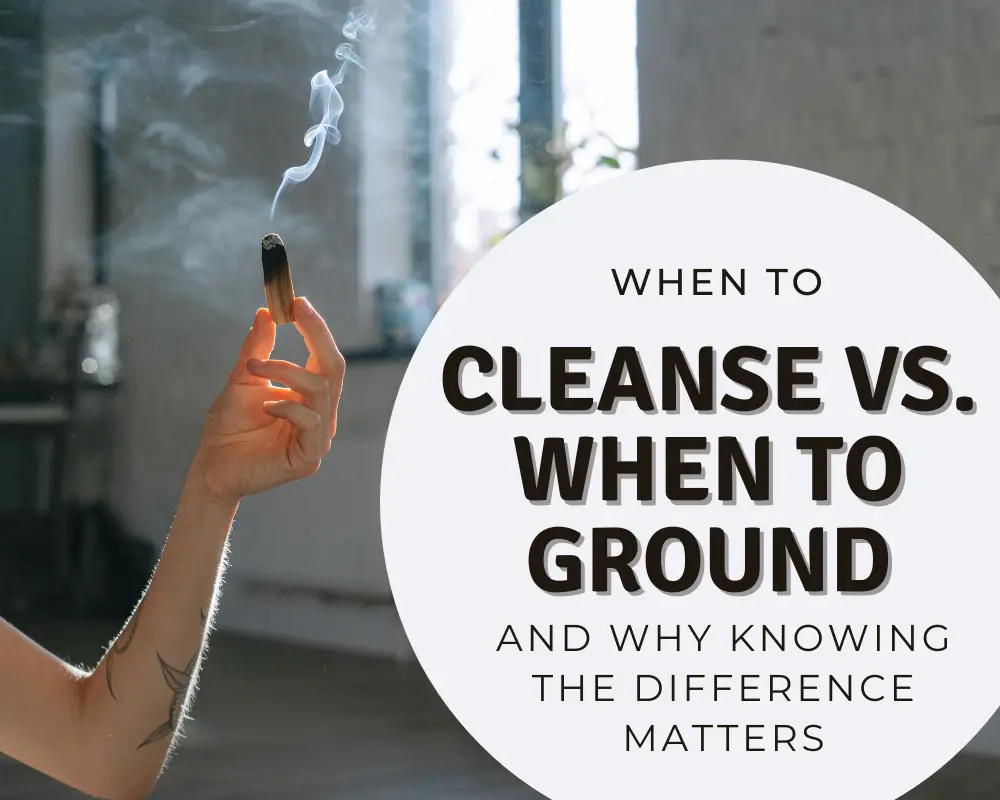
When you work with tools like cleansing sprays, herbs, smoke, or sound, it helps to pair them with grounding practices, even simple ones. Standing barefoot, drinking water, stretching, or sitting quietly afterward allows the energy shift to settle into your physical experience. This is where balance happens.
Spiritual practice isn’t about constant clearing or striving for some permanently “high” state. It’s about learning how to move between release and presence naturally. When you understand that, your tools stop feeling like fixes and start feeling like support.
That’s when they truly become useful.
Spiritual Disclaimer
The content shared on this website is offered for educational, spiritual, and reflective purposes only. It is not intended to replace professional medical, psychological, legal, or financial advice. Any practices, tools, or insights shared here are meant to support personal awareness and self-reflection. You are always encouraged to trust your own discernment and seek appropriate professional support when needed. Use what resonates, leave what does not, and engage with all practices responsibly and at your own discretion.


You May Also Like

STORi Makeup Organizer Review: The Simple Fix I Didn’t Know I Needed

How to Interview a Tarot Deck | Questions and Spread for Beginners